Why Some Friendships Feel Easy (and Others Leave You Exhausted)
Many adults come to us saying the same thing:
"I've always struggled to make friends."
"I don't know what's wrong with me."
"Everyone else seems to know how friendship works."
If you've felt this way, you're not alone.
The truth is that many people spend years trying to become the kind of person they think others want, rather than understanding what they actually need in a friendship.
Before you focus on making more friends, it helps to understand your friendship style.
Not Every Friendship Is Supposed to Work
One of the biggest myths about friendship is that if you're kind enough, interesting enough, or try hard enough, you should be able to become friends with almost anyone.
Real life doesn't work that way.
Just as we have different personalities, we also have different social needs, communication styles, interests, and ways of connecting.
Some people love spontaneous plans.
Others need several days' notice.
Some enjoy talking for hours.
Others prefer sharing an activity together with very little conversation.
Neither approach is wrong.
They're simply different.
The goal isn't to be compatible with everyone.
It's to find people who are naturally compatible with you.
Your Social Battery Is Real
Many neurodivergent adults have spent years believing they're "bad at being social."
In reality, they may simply have a different-sized social battery.
Some people recharge by being around others.
Some recharge by being alone.
Some enjoy one-on-one conversations but find groups exhausting.
Others love structured group activities but struggle with unplanned socializing.
There isn't a "correct" amount of social interaction.
What matters is understanding what leaves you feeling energized versus what leaves you feeling depleted.
Instead of asking:
"Why can't I socialize like everyone else?"
Try asking:
"What kinds of social situations help me feel like myself?"
Masking Is Exhausting
Many neurodivergent adults become experts at masking.
Masking might look like:
Constantly monitoring what you say.
Copying how other people behave.
Hiding your interests.
Pretending you're comfortable when you're overwhelmed.
Laughing along even when you're confused.
Sometimes masking helps people navigate difficult environments.
But it comes with a cost.
If you spend every interaction trying to perform instead of simply being yourself, friendships can become exhausting.
You may leave wondering why socializing feels so draining.
Often, it's not friendship that's draining.
It's pretending.
Different Doesn't Mean Wrong
One of the most freeing realizations is that friendship doesn't have to look the same for everyone.
You might prefer:
One or two close friends instead of a large social circle.
Seeing friends once a month instead of every weekend.
Long text conversations instead of phone calls.
Playing board games together instead of going to loud restaurants.
Walking together instead of making constant eye contact over coffee.
Those friendships are just as meaningful.
Quality matters far more than quantity.
What Does a Healthy Friendship Feel Like?
Healthy friendships aren't defined by how often you text or how many years you've known each other.
They're defined by how you generally feel when you're together.
A healthy friendship often feels:
Accepted—you don't have to hide who you are.
Understood—your communication style is respected.
Comfortable—you can relax instead of performing.
Mutual—both people make an effort.
Safe—boundaries are respected.
Energizing—you usually leave feeling better, not emotionally drained.
No friendship feels perfect all the time.
But healthy friendships generally leave you feeling valued rather than tolerated.
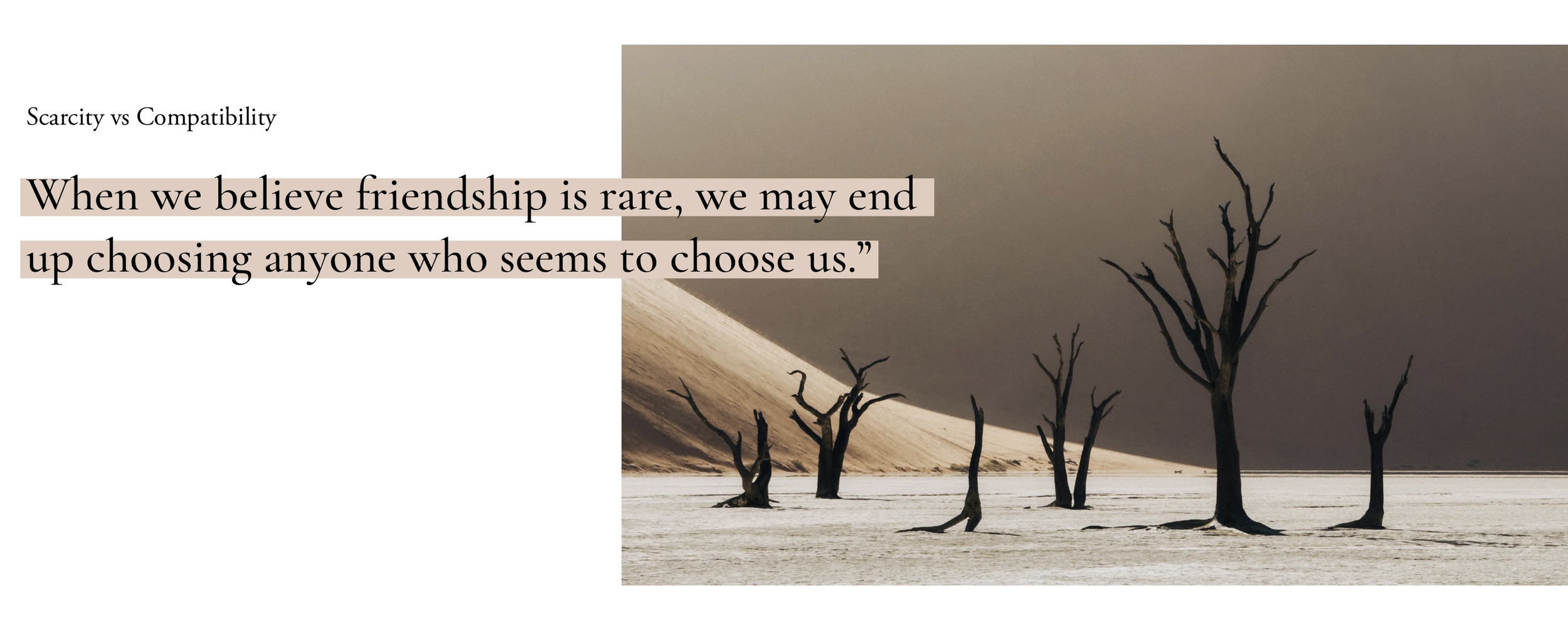
Stop Asking, "How Can I Fit In?"
Many people spend years asking:
"How do I become someone other people will like?"
A more helpful question is:
"What kind of people allow me to be myself?"
Those are very different goals.
One requires constant self-editing.
The other requires finding compatible people.
That shift can completely change how friendship feels.
A Question Worth Reflecting On
Think about the people you've felt most comfortable with.
What did they have in common?
Maybe they shared your sense of humor.
Maybe they accepted your quirks.
Maybe conversations felt easy instead of forced.
Maybe you didn't have to explain yourself all the time.
Those clues tell you something important.
They aren't just describing those people.
They're describing the kinds of friendships where you thrive.
A Final Thought
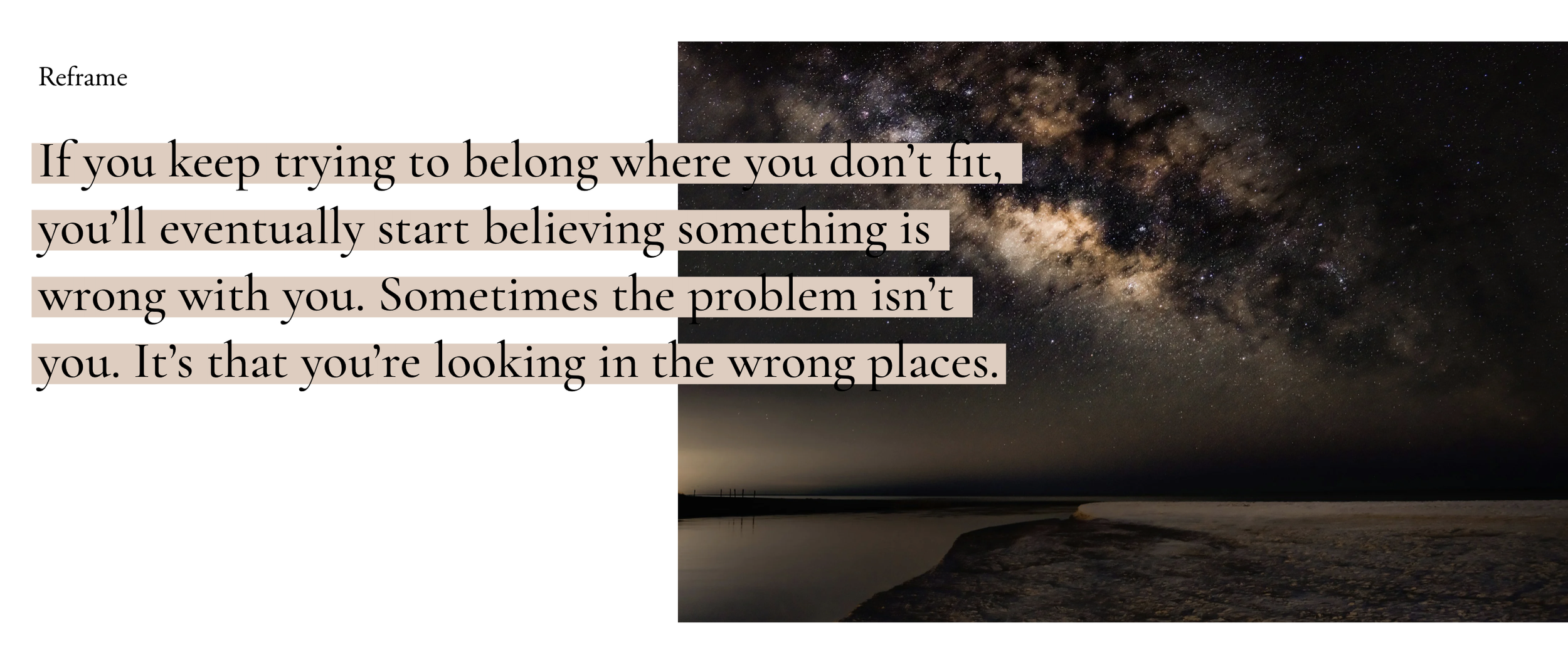
If you keep trying to build close friendships with people who aren't a good fit, you may start believing you don't belong anywhere.
But the problem may not be you.
It may simply be that you've been searching in the wrong places.
You don't have to become a different person to find meaningful friendship.
You need to find people with whom you no longer feel the need to become someone else.