Protecting Your Energy Without Pushing Friends Away
Many neurodivergent adults enjoy spending time with friends — but socializing often requires significantly more energy than other people realize.
After a busy week, a loud event, a day of masking, or simply because your social battery is empty, you may need to turn down an invitation from someone you genuinely like.
Unfortunately, many people worry that saying "No" will send the wrong message.
"What if they think I don't like them?"
"What if they stop inviting me?"
The truth is, declining an invitation doesn't have to communicate rejection.
With clear communication, you can protect both your energy and your friendships.
After all, as we always say in Constellations, “clarity is kindness …”
Your Social Battery Is Real
Just as a phone battery drains throughout the day, so can your social energy.
For many neurodivergent people, masking, navigating sensory environments, monitoring conversations, and adapting to social expectations all use significant mental energy.
When your battery is low, you might need:
A quiet evening at home.
Time alone after a busy weekend.
To skip a large gathering.
Longer to reply to messages.
None of these mean you don't value your friendships.
They simply mean your battery needs recharging.
A Simple Formula
When you decline an invitation, you don't need a long explanation.
A simple response often works best:
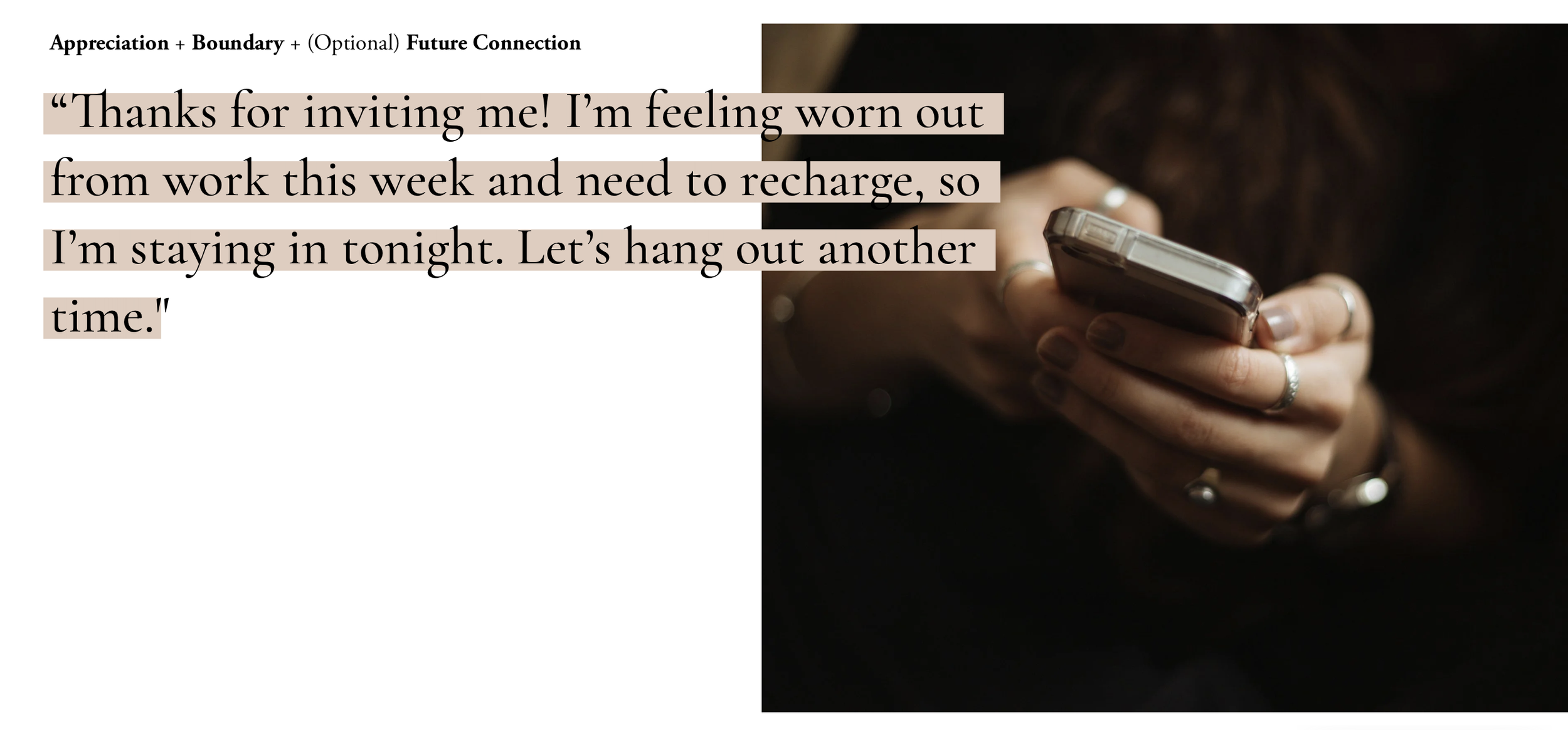
Appreciation → Boundary → (Optional) Future Connection
For example:
"Thanks for inviting me! I'm feeling worn out from work this week and need to recharge, so I'm staying in tonight. I'd love to hang out another time."
That short message communicates several important things:
I appreciate you thinking of me.
This isn't about you.
I'm taking care of myself.
I still value our friendship.
If you genuinely want to spend time with them another day, say so.
A simple sentence like "I'd love to see you another time" helps reassure your friend that you're declining this invitation, not the friendship itself.
You Don't Need to Earn Permission to Rest
Many people instinctively over-explain.
They apologize repeatedly.
They try to convince the other person that they're tired "enough" to deserve staying home.
You don't have to do that.
Healthy friendships don't require you to justify taking care of yourself.
As we often say:
Clarity is kindness.
Healthy Friends Respect Your Battery
Healthy friends may be disappointed.
They may wish you had been able to come.
But healthy friends don't make you feel guilty for having limits.
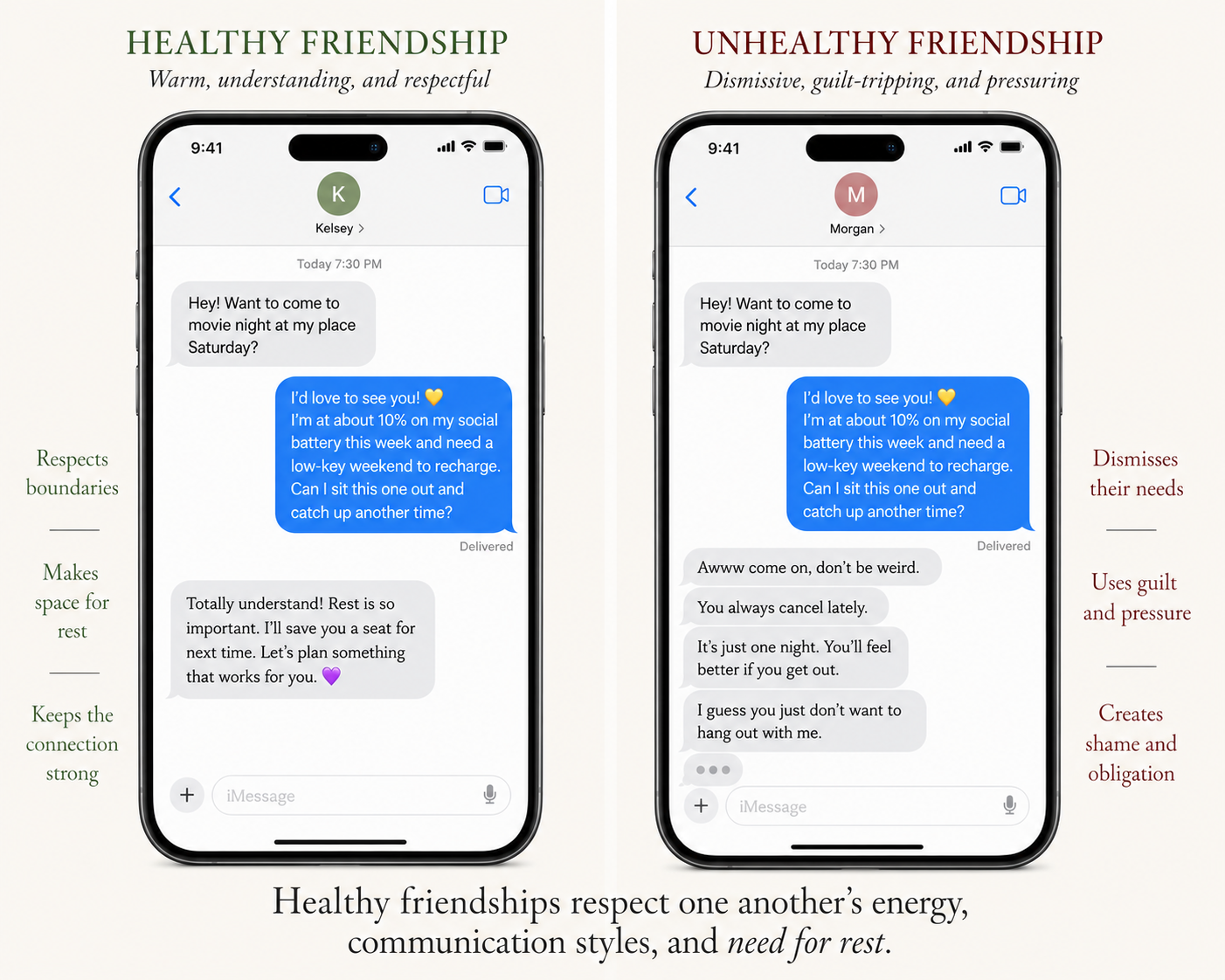
A response like this strengthens connection:
"No worries! Get some rest. Let's plan something another time."
It communicates, "I care about you more than I care about getting my way."
Watch the Pattern
No friend responds perfectly every time.
That's why it's helpful to look for patterns rather than isolated moments.
One pattern deserves particular attention:
Pressure is poison.
If someone regularly responds to your need for rest with guilt, shame, or pressure—
"Come on."
"You always cancel."
"I guess you just don't want to spend time with me."
—it's worth noticing.
Healthy friendships leave room for boundaries.
They make space for different communication styles, different energy levels, and different needs.
The right people won't expect you to ignore your limits just to prove you care.
Because rest isn't rejection.
It's how many neurodivergent people make sure they have enough energy to continue showing up for the people who matter most.